
Walk into enough restaurants these days and the pattern starts to feel familiar. A kiosk where a host used to stand. A QR code where a menu used to sit. A tablet bolted to the table for ordering, payment, and — in some cases — the kind of small talk that used to happen between a server and a guest. The technology works. It’s often faster, cheaper to operate, and increasingly what larger chains are building their entire service models around.
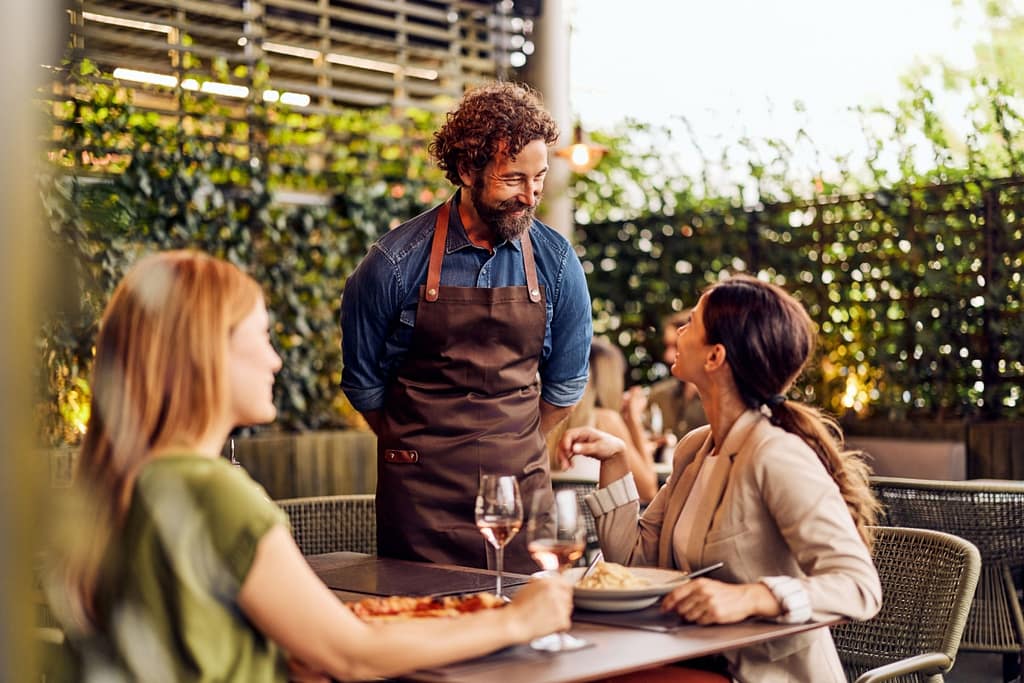
But something gets lost in the transaction. And for independent restaurant owners paying attention, that loss is actually an opportunity.
Gayle Smith Gay has spent more than two decades in the restaurant industry watching it change. New technologies come and go. Customer expectations shift. Costs fluctuate. But one thing has remained constant across all of it: the guests who keep coming back aren’t coming back for efficiency. They’re coming back for how the place makes them feel.
What Automation Does Well — and What It Can’t Touch
To be clear, technology isn’t the enemy. Reservation software, inventory management tools, digital payroll systems, online ordering platforms — these are genuinely useful, and smart independent operators use them. Automation handles repetitive tasks well. It reduces human error in certain processes. It can free up staff time for more meaningful interactions.
What it cannot do is make a person feel genuinely welcomed. It cannot read the table that needs a little more time before being approached. It cannot notice that a regular seems off today and quietly comp their coffee. It cannot turn a frustrating experience around with the right tone and a sincere apology. These things require judgment, empathy, and presence — human qualities that no system, however sophisticated, has yet come close to replicating.
Hospitality Is a Differentiator, Not a Given
Here’s what’s shifting in the industry: as more restaurants automate more of the guest experience, genuine human hospitality is becoming rarer. And things that become rare become valuable.
For independent restaurant owners, this is the competitive edge that no chain can easily replicate at scale. A large operation running on kiosks and centralized systems can optimize for speed and consistency. What it struggles to optimize for is warmth. The neighborhood restaurant where the owner knows your name, where the staff actually cares whether you enjoyed your meal, where the experience feels genuinely personal — that’s something a customer can’t get from a drive-through app, no matter how seamless the interface.
Gayle Smith Gay built her reputation in this industry on exactly that understanding. The back-of-house systems matter. The financials matter. But the reason people choose an independent restaurant over a corporate alternative — and keep choosing it — is almost always rooted in how that place makes them feel.
It Has to Be a Culture, Not a Policy
The mistake some owners make is treating hospitality like a checklist. Greet within thirty seconds. Smile. Use the guest’s name. These things aren’t wrong, but they’re not hospitality — they’re the skeleton of it. Real hospitality is a culture that runs through every person on the team and every moment of the guest experience, from the first phone call or online reservation to the moment someone walks out the door.
That means hiring people who actually like people. It means training staff not just on procedures but on the philosophy behind them. It means leading by example — being present on the floor, modeling the standard, making it clear through every action that how guests feel in this space is a genuine priority, not a talking point.
None of that is automated. All of it is a choice.
The Restaurants That Last Understand This
Technology will keep advancing. The restaurant industry will keep adopting it. Some of that adoption will make operations leaner, smarter, and more efficient — and that’s not a bad thing. But the independent operators who will still be standing in twenty years aren’t the ones who out-tech the chains. They’re the ones who out-care them.
In a world of automated everything, a dining room where guests feel truly seen and genuinely welcomed isn’t just a nice thing to offer. It’s a business strategy. And for small business owners like Gayle Smith Gay, it’s always been the point.
Leave a Reply